

Wear resistant steel castings are crucial components in various industries due to their ability to withstand abrasive forces and mechanical wear. As a leading supplier of wear resistant steel castings, I am often asked about the hardness of these castings and its significance. In this blog post, I will delve into the concept of hardness in wear resistant steel castings, its measurement, factors affecting it, and its importance in different applications.
Understanding Hardness in Wear Resistant Steel Castings
Hardness is a fundamental property of materials that refers to their resistance to indentation, scratching, or abrasion. In the context of wear resistant steel castings, hardness plays a pivotal role in determining their performance and longevity. A harder steel casting is generally more resistant to wear, making it suitable for applications where high levels of abrasion are expected.
The hardness of wear resistant steel castings is typically measured using standardized tests such as the Brinell, Rockwell, or Vickers hardness tests. These tests involve applying a specific load to the surface of the casting using an indenter of a known shape and size. The size of the indentation left on the surface is then measured, and the hardness value is calculated based on the applied load and the indentation size.
Factors Affecting the Hardness of Wear Resistant Steel Castings
Several factors can influence the hardness of wear resistant steel castings, including the chemical composition of the steel, the heat treatment process, and the cooling rate during solidification.
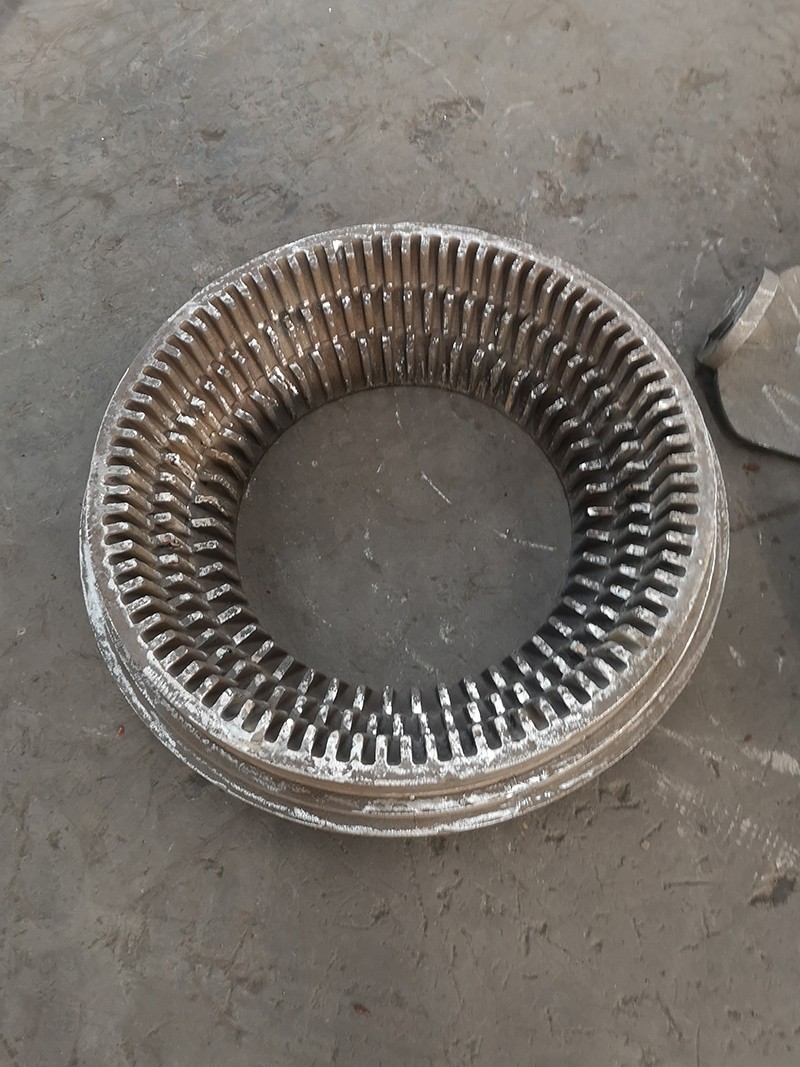

- Chemical Composition: The chemical composition of the steel is one of the primary factors affecting its hardness. Alloying elements such as carbon, chromium, nickel, and molybdenum can significantly increase the hardness of the steel by forming hard carbides and other alloy phases. For example, high-carbon steels are generally harder than low-carbon steels due to the presence of more carbon atoms, which can form hard carbide particles.
- Heat Treatment: Heat treatment is a crucial process for controlling the hardness of wear resistant steel castings. By heating the castings to specific temperatures and then cooling them at different rates, the microstructure of the steel can be altered, resulting in changes in hardness. For example, quenching and tempering are common heat treatment processes used to increase the hardness and toughness of wear resistant steel castings. Quenching involves rapidly cooling the castings from a high temperature to room temperature, which causes the formation of a hard martensite phase. Tempering is then performed to reduce the brittleness of the martensite and improve the toughness of the casting.
- Cooling Rate: The cooling rate during solidification also affects the hardness of wear resistant steel castings. A faster cooling rate generally results in a finer microstructure and higher hardness. This is because rapid cooling inhibits the growth of large grains and promotes the formation of a more uniform and fine-grained structure. In contrast, a slower cooling rate can lead to the formation of larger grains and lower hardness.
Importance of Hardness in Different Applications
The hardness of wear resistant steel castings is of utmost importance in various applications, as it directly affects their performance and service life. Here are some examples of how hardness plays a crucial role in different industries:
- Mining and Quarrying: In the mining and quarrying industry, wear resistant steel castings are used in equipment such as crushers, screens, and conveyor systems. These components are subjected to high levels of abrasion from rocks, ores, and other abrasive materials. A high hardness in the steel castings ensures better resistance to wear and longer service life, reducing downtime and maintenance costs.
- Construction: In the construction industry, wear resistant steel castings are used in machinery such as excavators, bulldozers, and loaders. These machines are exposed to harsh working conditions, including abrasive soils, rocks, and concrete. Harder steel castings can withstand the wear and tear associated with these conditions, ensuring reliable operation and extended equipment lifespan.
- Power Generation: In the power generation industry, wear resistant steel castings are used in boilers, turbines, and other equipment. These components are exposed to high temperatures, pressures, and abrasive particles. A high hardness in the steel castings helps to resist corrosion, erosion, and wear, ensuring efficient and reliable power generation.
Our Offerings: High - Quality Wear Resistant Steel Castings
As a supplier of wear resistant steel castings, we are committed to providing our customers with high - quality products that meet their specific requirements. Our castings are made from carefully selected alloys and undergo rigorous heat treatment processes to achieve the desired hardness and performance.
In addition to our standard wear resistant steel castings, we also offer High - temperature Resistant Steel Castings for applications where high temperatures are a concern. These castings are designed to maintain their hardness and strength at elevated temperatures, ensuring reliable performance in extreme conditions.
We also provide Special Alloy Steel Castings that are tailored to specific applications. These castings can be customized with different alloy compositions and heat treatment processes to achieve the optimal combination of hardness, toughness, and corrosion resistance.
Furthermore, our Industrial Steel Castings are widely used in various industrial applications. They are known for their high quality, excellent wear resistance, and long service life.
Contact Us for Your Wear Resistant Steel Casting Needs
If you are in need of high - quality wear resistant steel castings, we invite you to contact us for a detailed discussion. Our team of experts is ready to assist you in selecting the right casting for your application, ensuring that you get the best performance and value for your investment. Whether you have a small - scale project or a large - scale industrial requirement, we have the capabilities and expertise to meet your needs.
References
- Callister, W. D., & Rethwisch, D. G. (2017). Materials Science and Engineering: An Introduction. Wiley.
- ASM Handbook Committee. (2008). ASM Handbook Volume 1: Properties and Selection: Irons, Steels, and High - Performance Alloys. ASM International.
- Davis, J. R. (2001). Heat Treating of Steels. ASM International.


