

Under high - pressure conditions, wear - resistant steel castings exhibit a series of unique properties that are of great significance in various industrial applications. As a leading supplier of Wear Resistant Steel Castings, I am well - versed in the characteristics and performance of these materials. In this blog, I will delve into the properties of wear - resistant steel castings under high - pressure environments.
1. Hardness and Wear Resistance
One of the most prominent properties of wear - resistant steel castings under high - pressure conditions is their high hardness. Hardness is a crucial factor in determining a material's ability to resist wear. When subjected to high pressure, the surface of the wear - resistant steel casting experiences intense contact stress. A high - hardness surface can effectively resist the cutting, plowing, and abrasive actions of hard particles or rough surfaces.
The wear - resistant steel castings we supply are typically made from alloys that contain elements such as chromium, nickel, and molybdenum. These alloying elements form hard carbides and other intermetallic compounds within the steel matrix, significantly increasing its hardness. For example, chromium carbides are extremely hard and can act as barriers to the movement of dislocations, which are responsible for plastic deformation and wear.
Under high - pressure sliding or abrasive wear conditions, the high hardness of the wear - resistant steel castings allows them to maintain their surface integrity for a longer period. This results in reduced wear rates and extended service life, which is highly desirable in industries such as mining, construction, and manufacturing. For instance, in mining operations, where the equipment is constantly exposed to abrasive ores and rocks, wear - resistant steel castings can withstand the high - pressure abrasion and ensure the continuous operation of the machinery. You can learn more about our Wear Resistant Steel Castings on our website.
2. Toughness and Impact Resistance
While hardness is important for wear resistance, toughness is equally crucial, especially under high - pressure conditions that may involve impact loading. Toughness is the ability of a material to absorb energy and deform plastically before fracturing. In high - pressure applications, such as in crushers or impact mills, the wear - resistant steel castings may be subjected to sudden impact forces.
Our wear - resistant steel castings are designed to have a good balance between hardness and toughness. The alloying elements and the heat treatment processes are carefully selected to optimize the microstructure of the steel. For example, nickel is often added to improve the toughness of the steel by promoting the formation of a more ductile ferrite - austenite matrix. Heat treatment processes, such as quenching and tempering, can also refine the grain structure of the steel, which enhances its toughness.
Under high - pressure impact conditions, the tough wear - resistant steel castings can absorb the impact energy without cracking or fracturing. This not only ensures the safety of the equipment but also reduces the need for frequent replacements, saving both time and cost for the end - users.
3. Fatigue Resistance
High - pressure conditions often involve cyclic loading, which can lead to fatigue failure in materials. Fatigue resistance is the ability of a material to withstand repeated loading without failing. In wear - resistant steel castings, fatigue resistance is influenced by several factors, including the microstructure, surface finish, and residual stresses.
The microstructure of our wear - resistant steel castings is engineered to have a fine - grained structure with a uniform distribution of alloying elements. A fine - grained structure can impede the propagation of fatigue cracks, as the grain boundaries act as barriers to crack growth. Additionally, the surface finish of the castings is carefully controlled to minimize surface defects, such as scratches and porosity, which can act as stress concentrators and initiate fatigue cracks.
Residual stresses can also have a significant impact on fatigue resistance. During the casting and heat treatment processes, residual stresses may be introduced into the material. Our manufacturing processes are designed to minimize these residual stresses through techniques such as stress relieving heat treatment. By reducing the residual stresses, the fatigue life of the wear - resistant steel castings can be significantly extended.
4. Corrosion Resistance
In some high - pressure applications, wear - resistant steel castings may also be exposed to corrosive environments. Corrosion can weaken the material and accelerate wear, especially when combined with high - pressure conditions. Therefore, corrosion resistance is an important property to consider.
Our company also offers Corrosion Resistant Steel Castings that can be used in such environments. These castings are made from special alloys that contain elements such as chromium, nickel, and molybdenum, which form a passive oxide layer on the surface of the steel. This oxide layer acts as a barrier to prevent the penetration of corrosive agents, such as water, acids, and salts.
Under high - pressure and corrosive conditions, the corrosion - resistant wear - resistant steel castings can maintain their mechanical properties and surface integrity. This is particularly important in industries such as oil and gas, where the equipment is often exposed to harsh chemical environments and high - pressure fluids.
5. Dimensional Stability
High - pressure conditions can cause deformation in materials, which can affect the dimensional accuracy of the wear - resistant steel castings. Dimensional stability is the ability of a material to maintain its shape and size under different operating conditions.
Our wear - resistant steel castings are manufactured using advanced casting techniques and precise machining processes to ensure high dimensional accuracy. The alloy composition and heat treatment processes are also optimized to minimize thermal expansion and contraction, which can occur under high - pressure and high - temperature conditions.
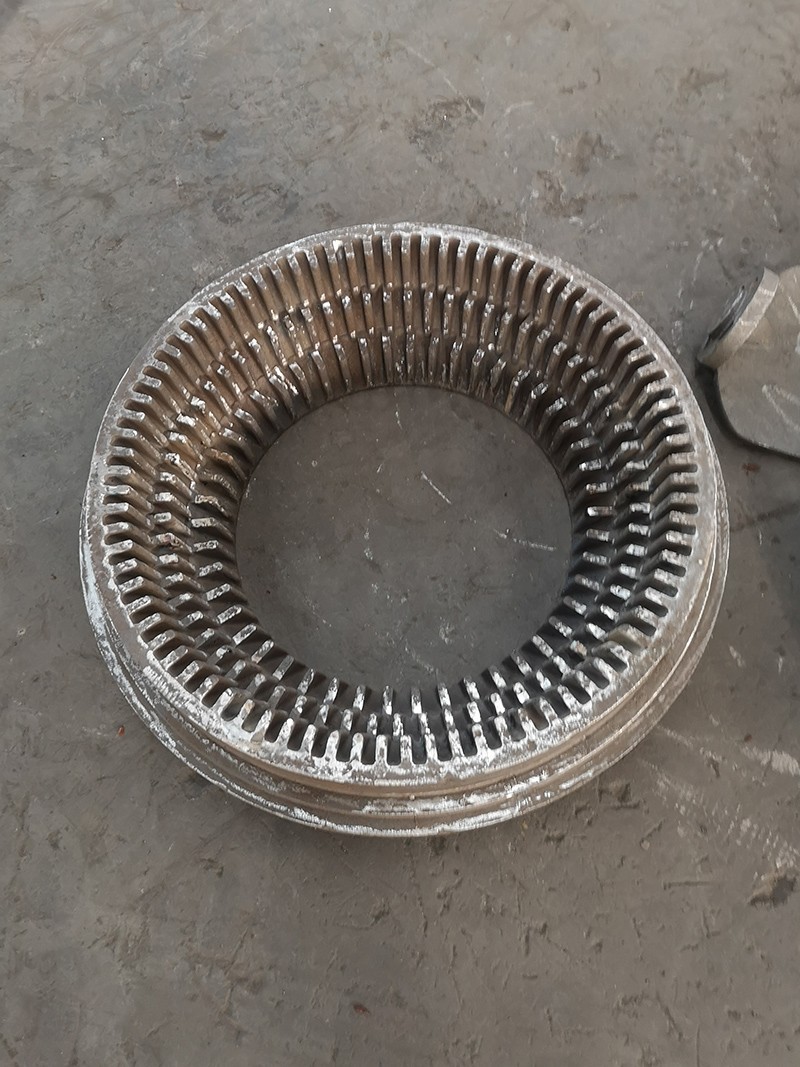

In applications where tight tolerances are required, such as in precision machinery, the dimensional stability of the wear - resistant steel castings is crucial. It ensures that the components fit together properly and function as intended, reducing the risk of mechanical failures and improving the overall performance of the equipment.
6. Thermal Conductivity
In high - pressure applications, heat is often generated due to friction and deformation. Thermal conductivity is the ability of a material to conduct heat. A high thermal conductivity can help to dissipate the heat generated during operation, preventing the material from overheating and reducing the risk of thermal damage.
Our wear - resistant steel castings have a relatively high thermal conductivity, which allows them to effectively transfer heat away from the contact surfaces. This is beneficial in applications such as high - speed machining and metal forming, where the heat generated can be significant. By maintaining a lower temperature, the wear - resistant steel castings can retain their mechanical properties and reduce the wear rate.
7. Compatibility with Other Materials
In many industrial applications, wear - resistant steel castings are used in combination with other materials, such as polymers, ceramics, or other metals. Compatibility with these materials is important to ensure the proper functioning of the equipment.
Our wear - resistant steel castings are designed to have good compatibility with a wide range of materials. The surface properties of the castings can be modified through surface treatment processes to improve the adhesion and interaction with other materials. For example, in applications where the wear - resistant steel casting is in contact with a polymer seal, a surface treatment can be applied to improve the sealing performance and prevent leakage.
Conclusion
In conclusion, wear - resistant steel castings exhibit a variety of properties under high - pressure conditions, including high hardness, toughness, fatigue resistance, corrosion resistance, dimensional stability, thermal conductivity, and compatibility with other materials. These properties make them suitable for a wide range of industrial applications, from mining and construction to manufacturing and oil and gas.
As a leading supplier of Wear Resistant Steel Castings, we are committed to providing high - quality products that meet the specific requirements of our customers. Our team of experts can work closely with you to select the most appropriate material and manufacturing process for your application. If you are interested in our products or have any questions about wear - resistant steel castings, please feel free to contact us for further discussion and potential procurement. We also offer Special Alloy Steel Castings that may meet your specific needs.
References
- ASM Handbook Volume 1: Properties and Selection: Irons, Steels, and High - Performance Alloys. ASM International.
- Callister, W. D., & Rethwisch, D. G. (2011). Materials Science and Engineering: An Introduction. Wiley.
- Totten, G. E., & MacKenzie, D. S. (2003). Handbook of Aluminum and Aluminum Alloys: Processes, Performance, and Applications. CRC Press.


