
Hey there! As a supplier of Industrial Steel Castings, I've been in the thick of this industry for quite a while. I've seen firsthand how these steel castings are the backbone of so many industrial applications. Today, I'm gonna dive into the mechanical properties of industrial steel castings, which are super important for anyone looking to use them in their projects.
Strength
One of the most crucial mechanical properties of industrial steel castings is strength. Strength refers to the ability of the steel casting to withstand an applied load without breaking or deforming permanently. There are different types of strength, like tensile strength, compressive strength, and shear strength.
Tensile strength is the maximum stress a material can withstand while being stretched or pulled before it breaks. Industrial steel castings usually have high tensile strength, which makes them ideal for applications where they'll be under tension. For example, in the construction of bridges or heavy machinery, parts made from steel castings need to have high tensile strength to handle the pulling forces they'll encounter.
Compressive strength, on the other hand, is the ability of the material to resist being crushed or compressed. In applications like building foundations or columns, steel castings with high compressive strength are essential. They can support heavy loads without collapsing under the weight.
Shear strength is the strength of the material against forces that cause one part of the material to slide past another. In gears or fasteners, shear strength is a key property. The steel castings used in these components need to be able to withstand the shearing forces generated during operation.
Hardness
Hardness is another important mechanical property. It's a measure of how resistant the steel casting is to indentation, scratching, or wear. Hardness is often related to strength, but they're not exactly the same thing. A hard steel casting can resist deformation from abrasive materials or impacts.

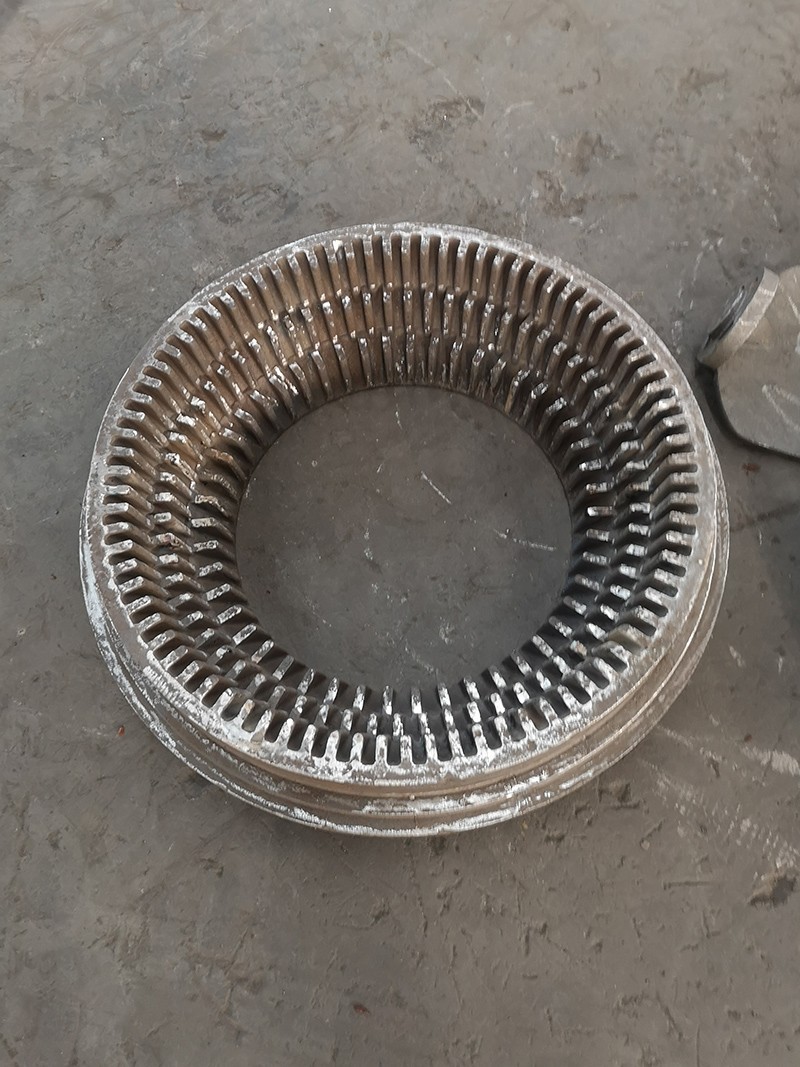
There are different ways to measure hardness, like the Brinell hardness test, the Rockwell hardness test, and the Vickers hardness test. Depending on the application, different levels of hardness are required. For example, in cutting tools, high hardness is necessary so that the tool can maintain its sharp edge and cut through materials effectively. On the other hand, in some applications where flexibility is more important, a lower hardness might be preferred.
Ductility
Ductility is the ability of a material to be stretched or deformed without breaking. Industrial steel castings with good ductility can be formed into different shapes through processes like forging or rolling. This property is especially important in applications where the steel casting needs to be shaped or bent during manufacturing or use.
For instance, in the automotive industry, steel castings used in parts like fenders or body panels need to have some degree of ductility. They need to be able to withstand minor impacts and deformations without cracking. Ductility also allows for easier machining and welding of the steel castings.
Toughness
Toughness is the ability of a material to absorb energy and deform plastically before fracturing. It's a combination of strength and ductility. A tough steel casting can withstand sudden impacts or dynamic loads without breaking.
In applications like mining equipment or military vehicles, toughness is a critical property. These machines often operate in harsh environments where they're subjected to high-impact forces. Steel castings with high toughness can prevent catastrophic failures and ensure the safety and reliability of the equipment.
Fatigue Resistance
Fatigue resistance is the ability of a material to withstand repeated loading and unloading without failing. In many industrial applications, steel castings are subjected to cyclic loads. For example, in engines or turbines, the components are constantly under changing stresses as the machine operates.
Steel castings with good fatigue resistance can last longer under these conditions. They can prevent the formation and propagation of cracks, which can lead to failure over time. Factors like the material's microstructure, surface finish, and the presence of defects can all affect the fatigue resistance of the steel casting.
Corrosion Resistance
When it comes to industrial steel castings, corrosion resistance is also a big deal. Corrosion can weaken the steel casting over time and reduce its mechanical properties. That's why we offer Corrosion Resistant Steel Castings. These castings are made with special alloys or coatings that protect them from rust and other forms of corrosion.
In applications where the steel castings are exposed to moisture, chemicals, or harsh environments, corrosion-resistant steel castings are a must. For example, in marine applications or chemical processing plants, the components need to be able to resist corrosion to ensure long-term performance.
Special Alloy Steel Castings
We also offer Special Alloy Steel Castings. These castings are made with specific alloys to achieve unique mechanical properties. For example, some special alloy steel castings have high heat resistance, which makes them suitable for applications in high-temperature environments like furnaces or jet engines.
Other special alloy steel castings might have improved magnetic properties or electrical conductivity. By choosing the right special alloy steel casting, you can get the exact mechanical properties you need for your specific application.
Why Choose Our Industrial Steel Castings
As a supplier of Industrial Steel Castings, we take pride in offering high-quality products. Our steel castings are made using the latest manufacturing techniques and strict quality control measures. We ensure that each casting meets the required mechanical properties and specifications.
We have a team of experts who can help you choose the right steel casting for your application. Whether you need a casting with high strength, good ductility, or excellent corrosion resistance, we've got you covered. We can also provide customized solutions based on your specific requirements.
Let's Talk
If you're in the market for industrial steel castings, I'd love to have a chat with you. We can discuss your project, your requirements, and how our steel castings can meet your needs. Whether you're working on a small-scale project or a large industrial application, we're here to help. So, don't hesitate to reach out and start the conversation. We're looking forward to working with you!
References
- ASM Handbook Volume 1: Properties and Selection: Irons, Steels, and High-Performance Alloys
- Metals Handbook Desk Edition, Third Edition


